Tuesday, February 12, 2013

Alaskas National Parks Invite Public Comment on Each Parks Compendium Through February 15 2013


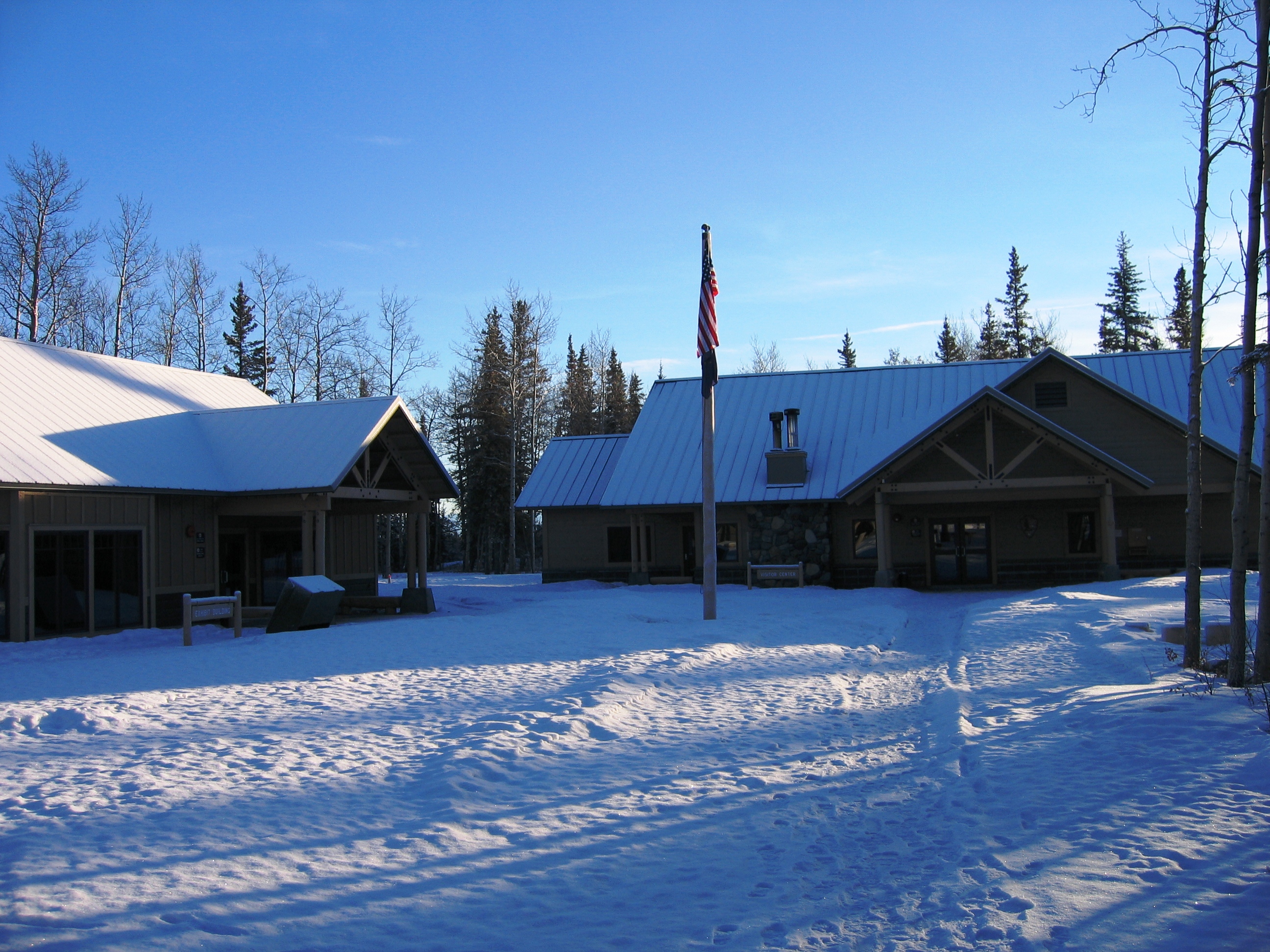
Wrangell-St. Elias Headquarters Visitor Center
The compendium is a compilation of all designations, closures and restrictions imposed under the discretionary authority within the regulations covering national parks. The compendium is a regulatory tool to help manage Alaska's national park areas for the public's enjoyment, use and protection.
This year, several NPS areas in Alaska are proposing restrictions to taking wildlife in national preserves. These proposals are based on recent changes in State of Alaska regulations pertaining to the take of wolves, coyotes, and bears in some game management units, including certain national preserves. Other proposed changes include the closure of an old trail in Wrangell-St. Elias where a newly constructed trail reaches the same destination, and human waste disposal practices in Glacier Bay.
The NPS is proposing to prohibit the take of wolves and coyotes between May 1 and August 9 in the following national preserves:Denali, Gates of the Arctic, Katmai, Aniakchak, Alagnak Wild River, Lake Clark, Wrangell-St. Elias, and Yukon-Charley Rivers. In some or all areas within these preserves, the State of Alaska now allows wolves and coyotes (including pups) to be taken in late spring and summer when the animals are denning and raising vulnerable offspring. The proposed shortening of the wolf and coyote season will protect animals at the den and during the period when their pelts have little economic or trophy value. It will also protect a subsistence opportunity for taking that wolf or coyote later in the year when their coats are prime in order to sell the pelt for cash.The proposed shorter season is also more consistent with federal subsistence regulations.
The proposed compendiums for Denali, Wrangell-St. Elias and Yukon-Charley Rivers include a prohibition on the taking of brown bears at a bait station. Bait stations typically consist of things such as grease or dog food set in a location that will attract the desired animal where it can then be taken. The public safety concerns posed by food-conditioned bears are widely recognized. These bears are more likely to be a danger to humans, and it is incongruent with best management practices and public educational messaging found in national park areas on the issue of food and bears.
The NPS also proposes to renew a temporary prohibition on using artificial light to take blackbears at dens and taking black bear sows with cubs at dens in Denali and Gates of the Arctic National Preserves.
Consistent with sound management principles and conservation of wildlife, practices that disturb animals when they are in a vulnerable state - in dens, when reproducing, or very young - are usually avoided.Accordingly, these practices have generally been prohibited under federal subsistence and state harvest regulations.Additionally, management practices that seek to increase harvest of predators in order to boost populations of prey species are not consistent with the management of National Park Services areas which are to retain naturally dynamic wildlife populations.
Public involvement in the compendium process began in early December when the National Park Service held the first of seven public hearings to hear input as these restrictions were being drafted. After this round of public comment on the compendium provisions ends on February 15, the NPS will consider revisions and expects to publish the final compendiums in April 2013.
Each park's proposed 2013 compendium is available at:http://www.nps.gov/akso/management/compendiums.cfm. A written copy may be requested directly from the park or the National Park Service, 240 W. 5th Avenue, Anchorage, AK99501, Attn:Compendium.
Comments will be accepted by mail or e-mail between January 15 and February 15, 2013. Comments are welcome at any time in addition to this timeframe, but comments received after February 15 will be considered in future compendium revisions.

Monday, February 11, 2013

Denali's Landscape and Potential Response to Climate Change

Denali National Park
 (Photo credit: Wikipedia)
An article in the current issue of Ecological Monographs provides new insights about the trees in Denali National Park's vast, open landscape and how changes in climate may translate to changes across interior Alaska.

The article summarizes work by scientists with the National Park Service's Inventory and Monitoring program. They examined over 1100 study plots in a 4.5 million-acre area of Denali National Park across 10 years to describe forest communities and draw connections between tree species, habitat, and environmental characteristics. The researchers then used their extensive set of results to evaluate several common hypotheses on how forests of the north will respond to climate change. The result is a study of unprecedented scale that paints an objective picture of the diversity of the landscape and sets the stage for tracking future changes in interior Alaska.

In contrast to some previous studies, the authors report that white spruce (Picea glauca) may respond favorably to warming conditions by increasing in abundance and distribution by expanding into newly thawed terrain. In addition, this study reports no current evidence for a large-scale shift from spruce to broadleaf forests in the lowlands of Denali National Park, where coniferous forests still dominate the landscape.

"We now have a solid baseline from which to measure changes and just as importantly, the causes of those changes," said Carl Roland, biologist with the National Park Service and lead author on the article. "The effects of climate change can already be seen in Alaska, and this study demonstrates the value of long-term monitoring programs to our collective knowledge about these vast areas." Roland added that "identical large-scale vegetation studies to the one in Denali are occurring in other Alaska parks, further expanding our understanding of Alaska's natural landscapes and how they may change over time."

Alaska's interior is part of the boreal forest-the largest land biome on earth. These forests, which occur in the northern portions of North America, Europe and Asia, are expected to undergo major shifts as a result of climate change. Over such a large area, even slight shifts in the distribution of species can result in major changes to the northern forests of the world. Monitoring these forests on a large scale is crucial for informing scientists and natural resource managers on how to adapt to and mitigate these changes.

The Central Alaska Inventory and Monitoring Network is a program of the National Park Service tasked with monitoring the status and trends of select "vital signs" to track the overall health of ecosystems within national parks over time.

The full article describing this study is freely accessible through the Ecological Monographs website. Roland, C. A., Schmidt, J. H., and Nicklen, E. F. 2013. Landscape-scale patterns in tree occupancy and abundance in subarctic Alaska. Ecological Monographs: 83 (1): pp. 19-48.

Open access article (available as pre-print)

Sunday, February 10, 2013

Results of Kenai Brown Bear Population Study Released

Boundary Map of the Kenai National Wildlife Refuge


A study conducted by the U.S. Fish and Wildlife Service and the U.S. Forest Service has produced the first estimate of brown bear population size on the Kenai Peninsula using local field data. Conducted in June 2010 on the Kenai National Wildlife Refuge and the Chugach National Forest, the study concluded that the best estimate is 624 brown bears. Prior to the study, land and wildlife managers lacked information on the number of bears in the area.
Scientists arrived at the final estimate for the Peninsula through two steps. First, they used field methods and DNA analysis to sample the brown bear population on a well defined study area that included 70% of the Peninsula’s available brown bear habitat. This yielded an estimate of 428 brown bears (with a 95% confidence interval of 353 – 539 bears) on the 2.9 million-acre study area. The scientists then used the best estimate of brown bears on the study area and expanded it to available bear habitat on the entire Peninsula, producing the estimated total of 624 bears.
Federal and State resource managers on the Kenai Peninsula have long recognized the importance of developing a population estimate to guide brown bear management. Terri Marceron, Forest Supervisor on the Chugach National Forest noted that the investigation was both valuable and timely. “Brown bears serve important functions in ecosystems on the Peninsula, and are highly valued by residents and visitors.” She added, “As we initiate Forest Plan Revision in February, our first phase will be sharing status and trend information on various resources, including this new data on brown bears.”
The study used a methodology called mark-recapture, which relied on identifying individual bears through analysis of DNA extracted from hair samples collected on a grid across the study area. Hair samples were obtained by attracting bears to barbed-wire enclosures, each of which surrounded a scented lure. The accuracy of the population estimate was improved using information from radio-collared bears known to frequent the study area; which was made available through independent studies being conducted by the Alaska Department of Fish and Game.
The estimate includes both cubs and adult bears. Using information on the average litter size of cubs accompanying radio-collared female bears on the study area and the overall sex ratio determined from this study, the estimate of 624 bears translates into approximately 200 adult female, 200 adult male, and 224 cubs.
Results of the study are detailed in the report The Kenai Brown Bear Population on Kenai National Wildlife Refuge and Chugach National Forest. The study’s lead scientists, Dr. John Morton, supervisory wildlife biologist at the Kenai National Wildlife Refuge; Martin Bray, a Chugach National Forest wildlife biologist; and Dr. Greg Hayward, wildlife ecologist for the U.S. Forest Service’s Alaska Region, were assisted by two experts in their respective fields. Dr. David Paetkau, who conducted the DNA analysis, heads Wildlife Genetics International, a renowned wildlife genetics laboratory in Nelson, British Columbia. Dr. Gary White, professor emeritus at Colorado State University, conducted the data analyses which generated the population estimate. Dr. White is one of the world’s leading experts on wildlife population estimation using mark-recapture methodology.
Andy Loranger, Refuge Manager of the Kenai National Wildlife Refuge, described the importance of the study’s results. “Kenai brown bears are a highly valued wildlife resource. Enumerating bears in heavily forested habitats like those on the Kenai and over large areas encompassing millions of acres is extremely challenging. This estimate of the Kenai brown bear population is an important piece of scientific information that will help inform land and resource management decisions and benefit the long-term conservation of this iconic wildlife species.”

Sunday, December 2, 2012

Investigation Continues in Fatal Bear Attack

After two days of rain and poor weather conditions, on Tuesday, August 28 rangers returned to the site of the fatal bear attack to continue investigation of the incident. They were able to determine where Richard White of San Diego had taken the images that were found in his digital camera. The initial photos of the bear were shot at a distance of 75 yards from the bear, which at that time had its head down in the vegetation, browsing on berries. Other images, including the last five where the bear's head was up, looking at and moving toward the backpacker, were taken at a distance of 60 yards.

Most of the backcountry units that were closed as a result of the incident are now open. Unit 10, where the attack took place, will remain closed for the next few days for continued monitoring and investigation. The unit encompasses an area of almost 50 square miles.

Monday, August 13, 2012

Federal subsistence hunting permits for Wrangell St Elias National Park and Preserve available

Welcome sign at the entrance to Wrangell–St. E...
(Photo credit: Wikipedia)
Federal subsistence registration permits for permit hunts in Wrangell-St. Elias National Park and Preserve are available at the park's Visitor Center in Copper Center, the Slana Ranger Station, and the Chitina Ranger Station.Please bring your State of Alaska resident hunting license, a photo ID (such as a driver's license), and proof of your local physical address (such as a voter registration card or utility bill listing the physical address) when you come to get a permit. Regular season sheep hunters, make sure you get a state harvest ticket and seal the horns. For more information, call 822-5234.

Sunday, July 1, 2012

Avalanche Recovery Efforts Suspended on Mt. McKinley


TALKEETNA, Alaska: A two-day ground search of the debris path from a fatal avalanche on Mt. McKinley has been suspended after clues were found confirming the likely location of four deceased climbers. Mr. Yoshiaki Kato, Ms. Masako Suda, Ms. Michiko Suzuki, and Mr. Tamao Suzuki of the Miyagi Workers Alpine Federation (MWAF) expedition are presumed to have died in the avalanche, while one team member, Mr. Hitoshi Ogi, survived the event with a minor hand injury.
The fatal avalanche happened at approximately 11,800-feet on the West Buttress, and was originally believed to have occurred early morning June 14. However NPS rangers have since confirmed with both Ogi and multiple teams on the mountain that the slide occurred during the early morning hours of Wednesday, June 13. Ogi first reported the event to NPS rangers when he arrived at the Kahiltna Basecamp the afternoon of June 14.
An aerial hasty search took place on June 14 followed by an initial four-member NPS ground search the following day. On Saturday, June 16, an expanded 10-person ground crew consisting of NPS rangers, volunteer patrol members, a dog handler, and a trained search and rescue dog probed and further investigated the debris zone. During the search, NPS mountaineering ranger Tucker Chenoweth descended into the same crevasse that the survivor Hitoshi Ogi had fallen into during the avalanche. While probing through the debris roughly 30 meters below the glacier surface, Chenoweth found a broken rope end that matched the MWAF team's rope. He began to dig further, but encountered heavily compacted ice and snow debris. Due to the danger of ice fall within the crevasse, it was decided to permanently suspend the recovery efforts.
There have six climbing fatalities on Mt. McKinley this season. Since 1932, a total of 120 climbers have perished on the mountain, 12 due to avalanches. This week's four avalanche fatalities were the first to occur on the popular West Buttress route.

Saturday, June 30, 2012

Mountaineer Dies in Ski Descent of Mount McKinley


TALKEETNA, Alaska: A 36-year-old Finnish mountaineer died from injuries incurred in a fall while descending Mt. McKinley the afternoon of Wednesday, May 23. Ilkka Uusitalo of Oulu, Finland was skiing down the 40- to 45-degree slope known as the 'Orient Express' with two teammates when he fell from an elevation of 17,800 feet and was unable to self-arrest. Uusitalo tumbled through snow, ice, and rocks, coming to a stop in a crevasse at 15,850 feet.
While one of his teammates continued down to the NPS ranger camp at 14,200 feet for rescue assistance, Uusitalo's other teammate rappelled into the crevasse with the help of a nearby team. They determined that Uusitalo was likely deceased.
An NPS response team arrived on scene approximately one hour later, and Ranger Tucker Chenoweth was lowered 60 feet into the crevasse by his team of 3 volunteer rangers. After confirming that Uusitalo was deceased, the NPS patrol members hauled both Chenoweth and the victim out to the glacier surface. Soon after, Uusitalo's body was evacuated via a long line operation by the park's A-Star B3 helicopter to the Kahiltna Basecamp, then on to Talkeetna.
This accident is the second fatal fall on Mt. McKinley this climbing season. Since 1972, 16 fatalities have occurred during descents of the Orient Express.